Monday, November 5, 2012

Koi Carp Diseases

There are any diseases that Koi fish can suffer from and many of them are connected directly to fluctuations in temperatures and extreme weather changes. Koi fish are very susceptible to the cold and tend to fall very ill if exposed to the cold for too long. Broadly speaking Koi Carp disease causes can be classified into five major categories - bacterial, fungal, viral, internal parasites and external parasites. Apart from this there are any environmental factors that can disturb a Koi fish's lifestyle and condition like too much exposure to the sun and sub zero temperatures. Koi fish are generally very strong fish and it does not take much effort to keep these fish as pets. Some diseases among Koi fish take care of themselves but others may cause a lot of issues for the fish and can even be fatal.

A disease known as Ichthyophthirius multifilis causes white spot like formations on the body of the fish. This disease is not graphic to the naked eye but can be seen clearly under a microscope. This disease ordinarily takes over when the immunity of the fish is weak and the surrounding pond climatic characteristic is low. This disease can be fatal but only to smaller fish as the adult fish can fight it off. As far as medicine in concerned, the best way to do away with this disease is to raise the climatic characteristic in the pond.

Microscope

The velvet disease though not very tasteless in Koi can be a source of great hurt for the fish. It is caused by an external toady called as Oodinium which basically attaches itself to the face of the fish ad begins to spread its tentacles until it covers a major part of the skin of the fish. After that it begins to kill off the cells it is nearest to eating away the nutrients from inside. Once that is done, it leaves the fish and begins to multiply, releasing more parasites into the water which have to seek out their own hosts. An entire fish pond can get sick with this type of disease in no time. The most apparent symptom of this kind of disease is a gold dust like formation on the skin of the fish. In many cases this disease causes very tiny puss filled pockets on the skin of the fish that can only be seen through a microscope. These puss pockets cause itchiness and therefore the fish are seen rubbing themselves against objects in the pond.

Koi fish are attacked by worms as well and a very generally found one is the Lernea elegans which can be a very big question for the Koi. These worms attach themselves to the belly of the fish and stay there for about a fortnight causing a lot of damage. The worst thing about these worms is that they reproduce rapidly and also leave the fish with bad gashed in the areas they have infected. Fish that are attacked by these worms have to then cope with the wounds on their bodies getting infected by other bacteria and fungi. Once these worms are spotted, immediate action is necessary otherwise the fish will make manifold problems at one time.

Another type of external toady are the Argulus lice. They are much easier to spot because of their green color and therefore can be nipped in the bud. The question with these lice is that they attach themselves to the fins and the sides of the fish and begin sucking out their nutritional needs. While they are attached, the skin of the fish can experience quite a bit of physical trauma prominent to ulceration and infection.

Koi Carp Diseases

Related : Best Fasteners hard disk network media player

Sunday, November 4, 2012

requisite Parts of a Microscope

The basic create of the microscope has not changed that much over time. They have evolved, but the basic concept is still the same. There are some key parts that many types of microscopes have in common. All of the parts of a microscope must function properly for the microscope to work well. If one part is substandard, it can render the microscope useless. The major parts of a microscope are the lenses, the arm, the tube, the illuminator, the stage, and the adjustment knobs.

There are two kinds of lenses on a microscope. The eyepiece lens, also known as the ocular lens is at the top of the microscope. This is the part that habitancy look through. The ocular lens is not adjustable on most models. The objective lens provides much of the microscope's magnification. A microscope normally has a few distinct objective lenses that vary in strength. The objective lenses are contained on a circular part located in the middle of the eyepiece and the stage. distinct objective lenses are chosen based on their strength. When someone wants to use a distinct strength of objective lens, they turn the circular disk to put an additional one lens over the stage.

Microscope

Other than the lenses, the other parts of a microscope are the tube, the arm, the stage, the illuminator and the adjustment knobs. The tube connects the ocular lens and the objective lens. habitancy look straight through the ocular lens and tube and see out of the objective lens at the bottom. The arm connects the lenses and the stage. It protrudes to the side and provides a handle to carry the microscope as well. The stage is where the object is located for examination. Stage clamps regain the microscope slides to the stage. The microscope slides include specimens such as blood or other liquids. The illuminator is below the stage. This part provides light to make the specimen easier to see. The illuminator is whether an actual light or a mirror.

Most microscopes highlight two adjustment knobs to help focus the lenses. The coarse adjustment knob is the larger of the two and brings the lens and the stage closer together. The fine adjustment knob is smaller and is used after the coarse adjustment knob to contribute any small adjustments to bring the item into sharp focus.

These parts of a microscope are coarse to nearly all models. Some microscopes use slightly distinct parts. For example, electron microscopes use electron beams instead of illuminators.

requisite Parts of a Microscope

Recommend : The Pneumatic Best Fasteners cheap unlimited cell phone plans media player hard disk

Saturday, November 3, 2012

The History of the Microscope

The first microscope was created hundreds of years ago. In the passing centuries, microscopes evolved into powerful, spoton tools that allow scientists to view tiny objects at a level of information that seems unreal. There are a wide array of ready microscopes, from the aggregate microscopes commonly found in high school science classrooms to distinguished scanning tunneling and electron microscopes used by Nobel Prize winners.

Most historians agree that two Dutchman made the first microscope in 1590. Zaccharias Janssen and his son Hans were two eyeglass makers who experimented with putting manifold lenses together in a tube. They found that objects under the tube were greatly enlarged. Over the next hundred years, scientists Robert Hooke, Anton van Leeuwenhoek, and others supplementary refined the work of the Janssens and used microscopes to gawk insects, blood, and other items. Scientists have prolonged microscopes into the present day. Now, microscopes can show tiny particles that are unseen by the naked eye in extremely exact detail.

Microscope

Microscopes operate on several principles. Most tasteless microscopes have two different lenses. Viewers look through the ocular lens, also known as the eyepiece. There is someone else lens, called the objective lens at the end of the ocular lens. The objective lens is a sphere shaped lens placed above the stage of the microscope. population place the object they want to gawk on the stage and can adjust the lenses to bring the object into focus. Most microscopes have an adjustment knob for tasteless focus and one for fine focus. Many microscopes have several objective lenses with different strengths for users to pick from. The lenses are arranged on a circular platform that can be rotated to have the different lenses put into place under the ocular lens. Microscopes also need a light source of some kind underneath the stage. Most market microscopes have a light bulb, but many high-end microscopes use lasers or electrons for illumination.

Microscopes have been used to make countless vital scientific discoveries. They are invaluable tools used in a collection of scientific fields that enable researchers to make discoveries that would be impossible with the naked eye.

The History of the Microscope

Thanks To : Sun Solar cell Fasteners Equipment waterproof camera panasonic

Thursday, November 1, 2012

Welding Microscopes

Micro welding or micro-dimensional welding is a widely used and approved process in today's industry. The process is carried out under a welding microscope which helps to weld small areas with maximum accuracy.

Welding microscopes are specially designed to offer great operate of part positioning and welding placement. They are provided with fine internal crosshairs, which helps to align the hardware element and the filler at the exact position. The weld speed of small welding can range in the middle of 10 and 30 inches/minute. In laser micro welding, the microscopes help to focus the laser beam at a exact point.

Microscope

There are many advantages of using microscopes in welding. small welding often results in a low-distortion and definite joining process. It can also minimize contamination of the web joint. The small images of welding can be captured by connecting the welding microscope to a video or photo camera using a photo-adapter. The microscope can also be plugged into a computer to report and process the images.

Almost all the laser welding systems come with in-built microscopes. Usually, a high capability stereo microscope - with a magnification factor fluctuating in the middle of x16 and x25 - is used. It offers clear viewing for definite welding. An optional angle microscope can also be used.

Many models of micro welders are also available, which use low-amp welders and welding microscopes. The welders can be located on the desired location of the weld, without affecting the shape or size of the material. Micro welders are mainly used for precision welding of jewelry. Some micro welders can be used to heal molds such as plastic injection molds, die cast molds, and rubber processing molds.

Welding Microscopes

Visit : The Pneumatic easy share cameras Get Rid Mosquitoes

Wednesday, October 31, 2012

Olympus, the Leader in Digital Camera industry

Olympus is a firm that focuses on manufacturing optics and reprography products. It is originally from Japan and operates in some regions such as United States and Europe. Established on 1919, it artificial microscope and thermometer at its starting of operation. The infer why this firm uses name "Olympus" as its name and brand is because the founder, Takachiho Seisakusho, believe that this name is able in reflecting the strong desires in creating high quality world-class products.

Since 1936, it began to fabricate its first camera and lens. The first camera is introduced as Semi-Olympus I. Other models that also became one of several first products that it introduced was Camera Pen Models series. This camera was launched in 1959 which featured with half-frame format that enabled it to capture 72 pictures of 18 x 24 mm format with a approved f 36 exposure roll of film. It was noted for its compact and transportable design. This camera team inventor, Yoshihisa Maitani, then industrialized a system called Om system. This system offers a full 35 mm Slr system of frame expert and was said able to compete with world-class cameras fellowships such as Nikon and Cannon. The system also introduced a more compact cameras and lenses that were smaller than any other cameras in this era, and it came with off-the-film (Otf) feature.

Olympus Light Microscope

Today, Olympus has become the leader of digital cameras industry by introducing a Four-Thirds system approved that is implemented for designing and developing digital single-lens reflex camera. This system was introducing a consumer-grade digital Slr on order to featuring live preview and became the approved of most Dslr makers. It recent cameras are now compatible with regain Digital (Sd) card format and comes with compact range and compact flash. Olympus's most recent development in cameras system is Micro Four Third system.

Today, Olympus has launched its most recent cameras model series such as Olympus E5 and Olympus E30 that comes with excellent features. Its E5 series come with capabilities such as Four Thirds Digital Slr, 12.3-megapixel sensor, 3-inch 920K-dot Lcd, and is very easy to use. It is able to produce excellent pictures results and with its very light weight, population are able to bring it around. Olympus is also decreasing the overlying optical drive through low pas filter that prevents moiré artifacts and false color in its photo results. This camera series from Olympus has bring the digital camera industry to an even develop level of competition.

Olympus, the Leader in Digital Camera industry

Tags : Measurement Guide wd media player

Monday, October 29, 2012

Great Price AmScope PS100E for $53.50


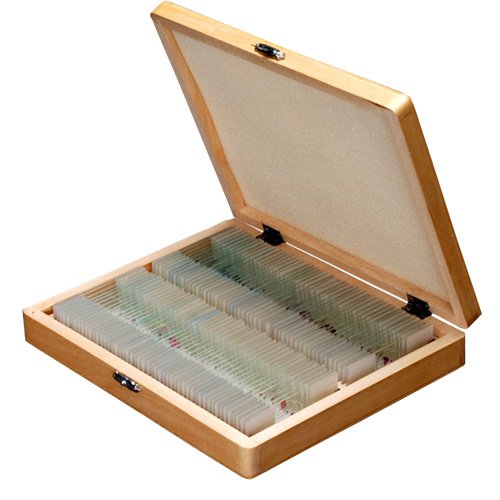
AmScope 100 Home School Biology Prepared Microscope Slides (Set E) Review


AmScope 100 Home School Biology Prepared Microscope Slides (Set E) Feature

  • Wide assortment of specimen glass slides of animal tissues, insect parts, plant parts, etc. for students to learn science
  • Specimens are on 1" x 3" (25mm x 75mm) glass slides with correct color and sharp images
  • Wooden box included for keeping the slides safe and secure
  • Name of the specimen included on each slide so that you know what you are looking
  • Allows you to use microscopes out-of-the-box

AmScope 100 Home School Biology Prepared Microscope Slides (Set E) Overview

This is a 100-piece very nice prepared microscope slide set of biology. The prepared slides we offer are professionally hand mounted, accurately stained, and individually labeled. Our microscope slides are great for students of all ages, from home-schoolers to college students looking for an excellent introduction to microscopy. The prepared slides give you the most diverse possible biological selection. They are coverslipped and preserved in cedar wood oil. These slides are premium and machine cleaned giving a sharp image. All slides are carefully labeled for easy reference and are arranged in a fine crafted varnished wooden case with brass hardware. This slide set is a rare mix of 100 prepared slides from which students can find a lot of fun. It is excellent for educational use and is perfect for all levels of student study including home school program. This slides set is brand new and has never been used, so your slides will be clean and free of scratches or damage. There is no risk of contamination from previous use. Its retail value is 0.

Related Products

Customer Reviews


*** Product Information and Prices Stored: Oct 29, 2012 09:00:04

Visit : Picking Safety Products Measurement Guide waterproof digital camera canon

Sunday, October 28, 2012

Cactus Adaptations

Environments like deserts, dry areas, and semi-barren regions receive less rainfall than other parts of the country, manufacture water scarcity a tasteless question in these areas. The plants which inhabit these environments have had to adapt to these conditions in order to survive. Desert plants-known as xerophytes-are most often succulents that have reduced, thick leaves. Apart from a few exceptions like Rhodcactus, all cacti are succulent plants. There are some specific cactus adaptations which enable cacti to survive in harsh environments.

The most prominent cactus adaptations are the ones that allow them to conserve water, such as having reduced leaves. Reduced leaves means reduced surface area, whether by manufacture leaves shorter and thicker, or longer and thinner. This means less water is lost to the atmosphere through evaporation. We know that this is an evolutionary adaptation because of what we see under the microscope. Some other species of cactus have small phloem, xylem and stomata, just like non-succulent plants. There are also ephemeral leaves in some of the cactus species, but these leaves don't last for long during the early amelioration stages of the stem. Opuntia Ficus-indica (prickly pear cactus) is an excellent example of cactus species which has ephemeral leaves as a succeed of evolution.

Microscope

Spines for Cactus Adaptations

Some cactus adaptations contain spines which let out less water during transpirations then leaves. Spines grow from specialized structures called areoles, and defend the cactus from water-seeking animals. A few members of the spine-cactus family have rudimentary leaves which fall off once the cactus has matured. There are two genera called Pereskiopsis and Pereskia which reserve large and non succulent leaves and even non succulent stems.

Cactus Adaptations through Stems

There are cactus plants that have adaptations such as enlarged stems which carry out photosynthesis and store water. These species of cacti (known as succulents) are coated with a waxy substance coated that prevents water evaporation. It helps forestall water from spreading on the surface, instead forcing water down the stem and into the roots. Cacti have hard-walled, thick succulent stem which market water when it rains and keeps water from evaporating. The stem is basically fleshy, green and photosynthetic, and the inside of the stem is whether hollow or spongy tissue to hold water.

Cactus Adaptations

Recommend : The Pneumatic Fasteners Equipment Pneumatic Plumbing led microscope light